


The most useful PMU upgrade is the one that improves a service your clients already want: a clearer design conversation, a purposeful colour palette or a working setup better matched to your technique. Use trends as ideas to evaluate, then choose one change with a specific job. For a brow-focused studio, start with the gap clients mention most often before expanding stock or services.
Five practical directions below connect client experience with equipment and palette choices. They are a planning framework rather than a claim that every market is moving in the same direction.
1. Make subtle design easy to explain
A client asking for natural brows needs a conversation about shape, density and the front-to-tail transition. Build a small set of your own healed references that shows those differences. Write the reason for each example so the consultation offers a choice rather than a wall of photographs.
The natural-design guide helps clients describe the result. Use it to prepare the brief, then show the design you propose. Record the requests that become bookings so your own studio has a useful signal for what to develop.
2. Build a palette with distinct colour roles
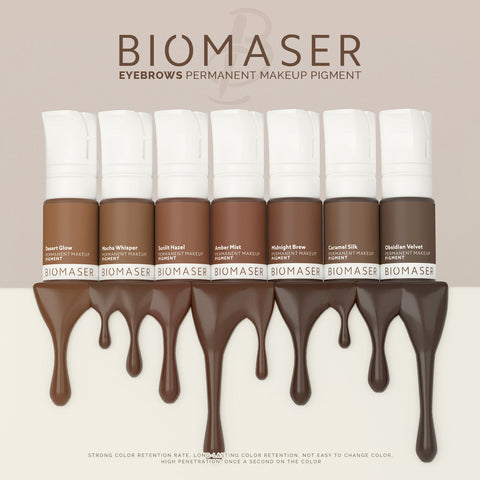
For brows, begin with the colour role you use most often. The Biomaser Blend brow palette has eight 12 ml shades. BPE02 / Brown Coffee is a medium-depth neutral starting point; BPE01 adds softer definition, while BPE05 adds deeper warmth.
Choose the next bottle when it answers a different brief. A soft brown and a deeper warm brown give you distinct choices; several similar purchases without a role make selection less clear. Biomaser Blend pigments comply with EU REACH and are built to the highest professional quality standard.
The pigment guide extends that approach to lips and eyeliner. Begin with a focused palette, then expand from the services you actually perform.

3. Adjust the machine when response is the real constraint
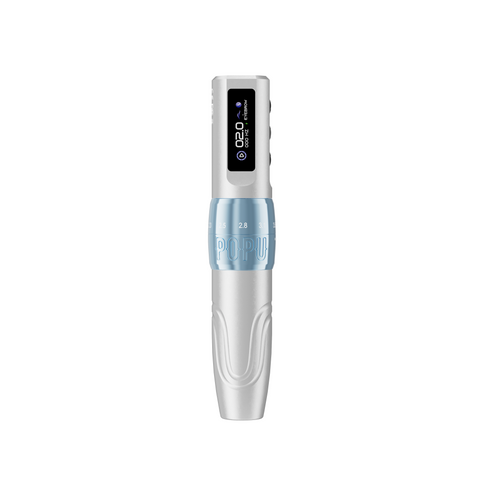
Biomaser U1 offers six stroke settings from 2.0 to 3.5 mm, a universal cartridge connection and two 850 mAh batteries. Choose it when your trained workflow benefits from comparing response across detail and shading while keeping the same pen.
If you prefer a single fixed working feel, a fixed-stroke machine is the simpler route. More settings are useful only when they serve a decision you make in your own work. The machine comparison guide sets out those trade-offs.
4. Give the main cartridge a deliberate role
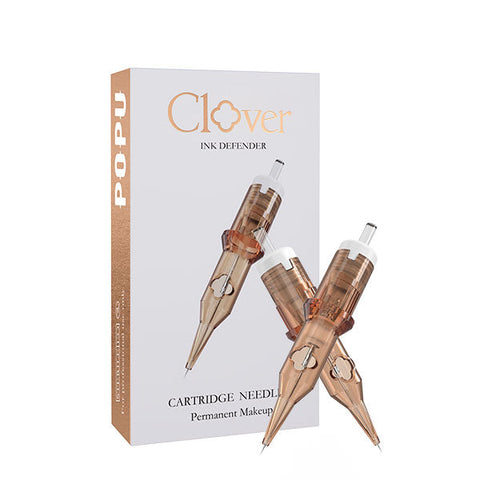
Pinky Ultra has the highest needle hardness and toughness among the cartridges ATTO sells. Begin with 1R / 0.25 mm for a single-point configuration, compare 3RL / 0.25 mm for grouped detail or 11U / 0.18 mm for a broader shading footprint.
Ultra uses 304 stainless steel, EO sterilisation, a silicone safety membrane and transparent medical-grade PC housing. Choose it when needle strength leads your purchase; choose the wider Pinky Pro family when the range of arrangements and pack sizes matters more. The cartridge guide connects the configuration with the mark.
5. Make the review part of the client experience
Keep the approved brief, pigment identity and review plan together. The AAD recommends colour, manufacturer and lot records, with care instructions and a route for concerns. A clear handover makes later questions easier to answer.
Measure this improvement through your own process: whether clients understand the care plan, whether records are complete and what questions return at review. Keep clinical concerns with the appropriate healthcare professional and appearance reviews within the agreed service.
Choose one useful change
Clients cannot describe subtle brows
- First action
- Prepare a small healed-reference comparison
- What to review
- Clarity of approved briefs
Palette feels repetitive
- First action
- Assign each shade a role
- What to review
- Use of each shade in real services
Machine response limits your workflow
- First action
- Compare a relevant setup in practice
- What to review
- Handling and control for your technique
Cartridge choice is habitual rather than purposeful
- First action
- Match configuration to the working mark
- What to review
- Your mentor's or practice review
Follow-up questions lack information
- First action
- Complete record and care handover
- What to review
- Quality of later conversations
Pick the row that describes your studio today. Set the action and review before buying more or adding another service. A targeted improvement gives the next purchase or training step a reason.
Common planning questions
Should a viral look change my service menu?
Use it as a reference, then compare with your own inquiries and bookings before investing.
When is an adjustable machine useful?
When changing response supports your trained detail and shading work. A fixed-stroke pen remains useful for a consistent working feel.
Which upgrade should come first?
The specific gap affecting your present services, with a clear action and review.