



A tattoo or permanent makeup studio in the United States needs to answer three separate questions before a needle reaches a client. Is the artist allowed to perform that service at that address? Is the ink or pigment sourced and handled through a traceable, suitable supply chain? If workers have reasonably anticipated contact with blood during their duties, has the employer put the applicable workplace exposure controls in place? These questions belong to different authorities and can apply at the same appointment.
Consider a brow artist renting a room inside a Florida salon and selling private-label lip pigment online. The county health department is the licensing starting point for the room and artist. The label and manufacturing arrangement determine the federal cosmetic roles for the pigment line. The duties performed by an assistant determine whether the studio needs to account for occupational exposure. A rental agreement and a training certificate answer only part of that opening decision.
Contents
- Identify which authority owns each decision
- Determine your role under FDA and MoCRA
- Evaluate tattoo ink suppliers and incoming lots
- Build the OSHA bloodborne pathogens program
- Put exposure controls at the workstation
- Open a Florida tattoo or PMU practice
- Open a Texas tattoo or PMU practice
- Prepare for an inspection and respond to incidents
- Frequently asked questions
Identify which authority owns each decision
Classify the service by what it does
Start with the proposed procedure, its device, what it puts into the skin, and where it happens. Describe machine brows, blade-assisted microblading, lip blush, and permanent eyeliner in those terms when you ask a regulator about scope. Florida expressly includes permanent makeup, micropigmentation, microblading, and microneedling using pigment, dye, or ink in its tattooing program. Texas treats permanent cosmetics as tattooing under Chapter 146. In both states a beauty-service name can sit alongside a tattoo licensing obligation. Florida Department of Health tattooing program · Texas Health and Safety Code Chapter 146
Separate the product, the workplace, and the premises
FDA treats inks used for intradermal tattooing, including permanent makeup, as cosmetics under federal law. OSHA addresses occupational exposure to blood and other potentially infectious materials through 29 CFR 1910.1030 when applicable. States and local authorities establish the operating rules for body art. A buyer can therefore use a supplier's lot information to trace a pigment while using the county's rules to decide whether an individual may apply that pigment at a specific location. Keep the sources with the decision they support. FDA tattoo and permanent makeup overview · OSHA bloodborne pathogens standard
Map the opening decision to named owners
| Decision | First authority or owner | What to establish before booking |
|---|---|---|
| Is cosmetic tattooing covered? | State body art program | The exact procedures and licensing classifications |
| May this person work here? | State or local licensing authority and establishment operator | Artist credentials or applicable pathway, address, dates, and scope |
| May this room operate? | Tattoo establishment regulator and relevant local authorities | Address-specific license, applicable inspection, land use, and local permissions |
| Who owns pigment listing and serious reports? | FDA rules and the product's responsible person | Name on label, roles, exemption analysis, and reporting owner |
| Which duties involve worker exposure? | Employer and applicable OSHA authority | Exposure determination by classification or task and accessible written plan |
| May a guest work at a show or class? | Artist authority and temporary-location regulator | Event scope, location approval, and individual status for those dates |
Use the same questions before signing a booth lease, hiring an assistant, or promoting a live demonstration. The person reviewing a lease should be able to point to the authorized premises. The person purchasing ink should be able to identify the product owner. The person training assistants should know which duties involve used equipment, barriers, linens, and waste. That division keeps responsibilities clear even when the business has one owner and shares reception space.
Determine your role under FDA and MoCRA
Identify the responsible person and manufacturing site
Under MoCRA the responsible person is the manufacturer, packer, or distributor whose name appears on the cosmetic product label in accordance with applicable labeling law. Facility registration and product listing are separate obligations. In general, the covered owner or operator registers the facility and renews registration biennially, while the responsible person lists each marketed cosmetic product and updates the listing annually. FDA describes the current procedures, exceptions, and submissions in its registration and listing materials. Ask a contract manufacturer and private-label distributor to identify these roles in writing and reconcile them against the actual retail label before placing an order. FDA MoCRA overview · FDA registration and listing guidance
Distinguish professional use from branded distribution
A studio that buys finished pigment and applies it in services typically approaches the product as a professional purchaser and user. If the studio puts its own name on a retail label, packages product for sale, or arranges manufacture for branded distribution, evaluate the actual activities and labels against MoCRA definitions. An online storefront and a physical workroom may have different roles in that same business. Document who holds the safety substantiation records, how the studio receives a lot-specific recall, and who responds when a client reports an adverse event.
Test small-business eligibility against the product category
MoCRA provides qualifying small businesses with exemptions from certain requirements for good manufacturing practices, registration, and listing. The exemption has statutory exceptions, including businesses that manufacture or process products that are injected and products that regularly contact the mucous membrane of the eye under customary or usual conditions of use. A pigment business should identify the exact product, intended application, and activities before relying on a small-business exemption. Sales volume alone answers only the size question. Obtain a product-specific assessment when the business introduces an intradermal pigment line, and keep the basis for that assessment with the manufacturing and labeling records. FDA MoCRA overview
Plan for safety substantiation and adverse-event reporting
The responsible person must ensure and maintain records supporting adequate safety substantiation. The law also requires the responsible person to submit reports of serious adverse events associated with use of the cosmetic product in the United States within 15 business days of receiving the report, with the required label copy. If additional medical or other information is received within one year of the initial report, the responsible person submits it within 15 business days of receipt. The studio can make that chain work by having a direct contact for its supplier and a procedure for preserving the bottle, lot, service date, and client account. Client care and product reporting can move in parallel. FDA MoCRA overview
Distinguish FDA registration, listing, and approval
A facility registration identifies a facility to FDA. A product listing identifies a product and its relevant information. For the purchase decision, evaluate the identity and suitability of the specific product and intended use, along with supplier and lot evidence. FDA explains that no color additives are approved for injection into the skin. A cosmetic color additive's status for external use, or a supplier's reference to registration, should never be treated as authorization for intradermal use. Make the product claim itself part of the label review, especially if a distributor uses the phrase FDA approved in a sales listing. FDA tattoo inks and permanent makeup
Evaluate tattoo ink suppliers and incoming lots
Apply FDA's 2024 final tattoo ink guidance at the right point
FDA's October 2024 final guidance addresses insanitary conditions in the preparation, packing, and holding of tattoo inks and the risk of microbial contamination. It gives recommendations for manufacturers and distributors. The guidance describes risks from contaminated ingredients, including water, and from equipment, environments, packaging, and handling. It also addresses manufacturing controls, testing the final formulated ink, and responding when testing identifies potentially harmful contamination. These recommendations give studios concrete questions for suppliers. A studio can ask how the supplier controls production water and how it releases finished lots without claiming to have audited the factory. FDA final tattoo ink guidance
Check each delivery before it reaches the treatment room
| Check | What to request or inspect | Action on a discrepancy |
|---|---|---|
| Product and label identity | Shade, intended professional use, responsible business, and intact retail label | Set the delivery aside while the supplier confirms the identity |
| Batch traceability | Legible lot and expiry where provided, purchase source, and delivery record | Hold stock whose lot cannot be matched to the product |
| Seal and physical condition | Intact packaging and closure, with no leakage or damage | Separate affected units and seek replacement or disposition |
| Supplier quality evidence | Relevant manufacturing controls and finished-product microbial control information | Ask for product and lot relevance before relying on a document |
| Storage instructions | Manufacturer instructions and observed storage conditions | Separate stock when conditions depart from the instructions and ask for disposition |
| Safety alert or recall | Exact label identifiers and affected lot range | Stop using the affected stock and follow the notice and local reporting steps |
A carton can contain multiple lots of the same shade. Receive by lot and carry that distinction to the service record where required or useful for traceability. Stock different lots separately so an unopened replacement can be identified quickly when a supplier alert lands during a booked day. A receipt saying only “brown pigment” may help accounting, while the bottle identifiers and service record are what help identify a specific group of clients if a recall covers one batch.
Before adding a second supplier, compare what happens after a shipment is accepted. Ask which contact handles an urgent quality complaint, how the supplier communicates the lot range in a recall, and whether the studio can retrieve a duplicate invoice if its purchasing records are unavailable. Identify a replacement shade or product for business continuity only after its intended use, labeling, and compatibility with the service have been reviewed. An order placed through an authorized supplier with clear lot records gives the team a direct way to investigate when packaging, storage, or a client's account raises a question.
Keep pigment handling traceable during service
Prepare the amount needed for one client using the establishment's approved workflow and applicable rules. Keep clean stock in its own area so a gloved hand handling used instruments can remain at the active station without crossing back into the clean supply zone. Use single-client pigment cups and discard remaining dispensed pigment in accordance with the studio's applicable procedure. If an opened bottle has been handled outside the approved workflow or its contents appear suspect, separate it from usable stock and identify the affected lot before investigating. Compare permanent makeup pigment by intended service, shade system, source, label, and lot controls. A product sold for synthetic practice belongs in a separately identified practice stock area.
Build the OSHA bloodborne pathogens program
Determine exposure by duty and work arrangement
The federal standard applies to occupational exposure, defined through reasonably anticipated contact with blood or other potentially infectious materials resulting from employee duties. Exposure determination identifies job classifications where all employees have exposure, classifications where some employees have exposure, and relevant tasks for the latter group. Make that determination without taking personal protective equipment into account. Include setup and teardown duties in the analysis. A worker whose title is receptionist can have relevant exposure if assigned to handle regulated waste or clean contaminated stations. A name in a booth-rental contract does not resolve employee status by itself. Ask the applicable labor authority or qualified adviser about the real work arrangement when classification is uncertain. OSHA 29 CFR 1910.1030(b) and (c)
Write a plan workers can use during a shift
An employer with occupational exposure must establish a written Exposure Control Plan designed to eliminate or minimize employee exposure. It identifies the exposure determination, how the employer implements the standard, and how exposure incidents are evaluated. Make the plan accessible and review and update it at least annually and when duties, tasks, or procedures affecting exposure change. The review addresses technological changes that eliminate or reduce exposure and documents appropriate commercially available and effective safer medical devices as specified by the standard. Where the solicitation requirement applies, the plan documents input from nonmanagerial employees responsible for direct patient care who are potentially exposed to contaminated sharps. OSHA 29 CFR 1910.1030(c)
Train at assignment, at least annually, and when changes affect exposure
Provide required training at initial assignment to tasks with occupational exposure and at least annually thereafter. When changes affect exposure, additional training may focus on those changes. The standard specifies training at no cost and during working hours, using language and content appropriate to employees' education, literacy, and language. Training includes an opportunity for interactive questions with the person conducting it. A classroom session can cover baseline concepts, while the studio shows workers where to dispose of a used cartridge, how to contact the designated clinician, and what to do after a splash during a busy afternoon. OSHA addresses tattoo and piercing training in its July 2008 interpretation. OSHA 29 CFR 1910.1030(g) · OSHA tattoo and piercing training interpretations
Arrange hepatitis B vaccination and confidential follow-up
Under the standard, covered employees with occupational exposure must be offered hepatitis B vaccination after required training and within ten working days of initial assignment, subject to the standard's exceptions. A worker who initially declines can later accept while still covered. An exposure incident calls for a confidential medical evaluation and follow-up to be made immediately available. Arrange access with a qualified healthcare provider before the first incident. Make the contact and route available for opening hours, evenings, and events. Preserve confidential medical information separately from the client schedule and the training roster. OSHA 29 CFR 1910.1030(f) and (h)
| Program element | Studio evidence | Practical implementation |
|---|---|---|
| Exposure determination | Listed classifications and relevant duties | Include cleanup, disposal, and assisting duties |
| Written Exposure Control Plan | Accessible current document and review date | Show the actual facility, equipment, and responsible staff |
| Engineering and work practice controls | Setup and teardown workflow | Put sharps disposal within reach at point of use |
| Training | Dates, contents or summary, instructors and attendees | Practise realistic task transitions and allow questions |
| Hepatitis B vaccination | Confidential arrangements and applicable declination documentation | Make the offer and timing part of onboarding |
| Exposure response | Provider contact, communication path, and incident documentation | Give staff a route they can use immediately |
| Recordkeeping | Appropriate separation of training and medical records | Follow the standard's applicable retention and access rules |
Put exposure controls at the workstation
Design the workflow around clean-to-used movement
Use universal precautions and put engineering and work practice controls into the procedure before selecting additional personal protective equipment for remaining exposure. A workable station separates clean supplies, the procedure area, and contaminated disposal. Put the sharps container where the operator can dispose of a cartridge after removal without walking behind another worker or setting it on the counter. Choose an appropriately labeled or color-coded container that closes, resists puncture, and is leakproof on the sides and bottom. Keep it upright, available near the use area, and replace it before overfilling. OSHA 29 CFR 1910.1030(d)
Specify the cartridge and barriers together
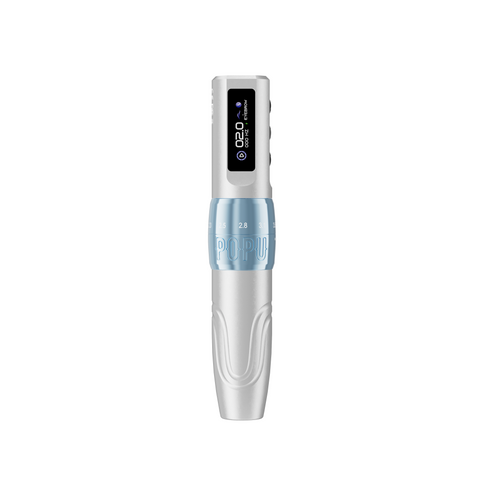
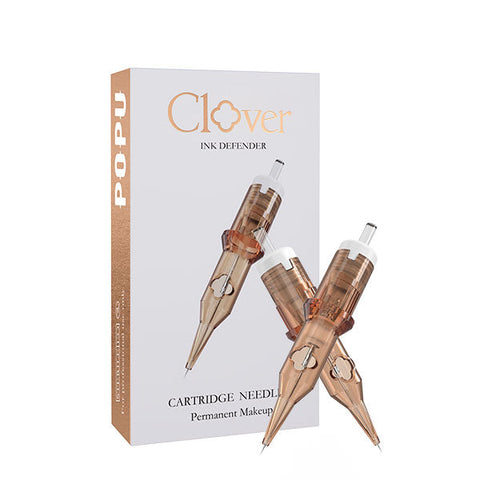
For a compatible universal cartridge machine, select the needle configuration for the actual procedure, then verify package integrity and compatibility at receiving. A fine single liner and a compact round shader can cover separate line and shading stations in PMU. For example, review the ATTO Pinky Pro single-liner cartridge range and Pinky Pro round shader range for the correct geometry and pack. A silicone backflow membrane is one feature of a cartridge. Use it alongside the required machine barriers, hand hygiene, single-use sharps handling, and the equipment manufacturer's cleaning instructions. A packaged cartridge and a clean machine body have separate handling paths once the procedure begins.
Build glove changes around predictable interruptions
Glove change points become easy to miss when someone reaches for a phone, adjusts a light, or opens a clean drawer mid-service. Set disposable barriers on appropriate touch points before the procedure and define how the artist pauses to access a fresh supply. Place a fresh supply area away from contaminated items and avoid opening clean drawers with procedure gloves. Choose protection based on the task and anticipated exposure, including eye or face protection where splash or spray may reasonably be anticipated. When reusable equipment is part of the service, follow the applicable licensing rules and manufacturer instructions for cleaning and any required disinfection or sterilization. OSHA 29 CFR 1910.1030(d)
Open a Florida tattoo or PMU practice
Establish the artist and establishment licensing path
Florida DOH administers tattoo licensing through county health departments. The agency's statewide program distinguishes tattoo artist licensure, tattoo establishment licensure, and guest tattoo artist registration. It expressly covers permanent makeup and microblading. A new operator should contact the county for the actual address and use the current artist and establishment instructions, including the applicable education documentation for the artist and the establishment application and inspection steps. Verify the current approved course and any applicable county fees before paying a training vendor or setting an opening date. Florida Department of Health tattoo licensing
For the ordinary artist application, Florida's rules call for identification showing that the applicant is at least 18 and evidence of completing a department-approved bloodborne pathogens and communicable diseases course with a score of at least 70 percent on the course examination. Check the application instructions for the county where the applicant intends to practice. Build the opening schedule around the county's actual processing and inspection steps, leaving time to resolve missing paperwork. Keep the educational course record in the artist file and handle the employer's own workplace exposure program separately. Florida tattoo artist licensure · Florida approved training information
Check the address before fitting out the room
Florida law restricts tattooing to appropriately licensed tattoo establishments or temporary establishments, subject to statutory exceptions. The license is valid for the location listed. For a suite inside an existing salon, provide the county with the street address and suite and describe which rooms, sinks, and storage areas are shared. Ask how the county will evaluate the floor plan, sanitation facilities, biomedical waste arrangements, and the applicable local approvals for the proposed use. Obtain clarity before setting a first appointment or assuming an adjacent room is within a license. Florida Statutes §381.00777 · Florida Department of Health tattoo licensing
Check the guest, venue, and live-model dates independently
Florida's guest pathway applies to qualifying applicants with active credentials from a jurisdiction outside Florida. The Florida DOH guide explains the supporting credentials and education review. If the home jurisdiction does not require the relevant artist credential, the guide directs the applicant to the Florida artist license route. Separately establish that the host address or temporary establishment can operate during the proposed dates. For a class, list who will actually tattoo live models. Review the role of each instructor and student with the county ahead of enrollment, especially when training will take place at a temporary venue. Florida guest tattoo artist registration guide
Open a Texas tattoo or PMU practice
Establish the studio license pathway
Texas DSHS requires businesses performing traditional tattooing, permanent cosmetics, and scarification to obtain the appropriate studio license. Chapter 146 and the related rules place the license on the studio or temporary location. A studio applicant should use DSHS's current forms or licensing system and check the relevant county or city for local requirements at the intended address. For a suite rental, confirm which studio license covers the room and proposed service. If the business changes address or ownership, check the applicable filing path before moving bookings. Texas DSHS licensing requirements · Texas studio applications and forms
Distinguish individual duties from the state studio credential
Texas's state framework licenses the studio. Artists still carry the individual operating obligations in the rules, and the studio must meet applicable minimum standards. Verify local requirements before assuming that a room or artist can begin work. Use the DSHS rules and licensee FAQ to confirm handwashing access, the location layout, records, equipment and sanitation requirements, and other operating details. For example, DSHS describes unobstructed handwashing access as being able to return to the work area without handling an item such as a door knob. Walk the proposed route during the fit-out and check door hardware and room access before the inspector arrives. Texas DSHS laws and rules · Texas DSHS licensee FAQ
Compare the two states before transferring a workflow
| Opening question | Florida | Texas |
|---|---|---|
| Does permanent makeup enter tattoo licensing? | Yes, with specific examples in the DOH program | Yes, permanent cosmetics are included |
| What happens at artist level? | Artist license or applicable guest registration | State framework centers on studio licensing, with artist duties under the rules |
| What happens at premises level? | Location-specific establishment license through the county health process | Appropriate DSHS studio license for the premises |
| Who handles an event venue? | County health department for the applicable temporary establishment pathway | DSHS temporary location application and applicable local authorities |
| Who checks local requirements? | Operator contacts county health and relevant local offices | Operator contacts DSHS and relevant city or county offices |
| What evidence travels with a relocating operator? | Training and other applicable records support the application process | Training and other applicable records support worker and studio compliance |
An artist moving across state lines should translate the operating model into the new state's rules. Start with the new address and service description. Identify how existing education records support the new process and which approvals are address-specific. Texas DSHS provides an application route for temporary events. Ask the organizer for the approved location and dates and establish what the license covers before advertising live tattooing at a workshop or show. Texas DSHS applications and forms
Review client eligibility, forms, and handover together
An intake form should reflect the actual restrictions that apply to the service. Texas DSHS describes a narrow exception to the rule against tattooing someone younger than 18. It relates to covering an existing tattoo under the conditions of 25 TAC §229.406(c). Route requests involving a minor to the studio manager before taking payment or putting the service on a calendar. Use the current rule to evaluate the specific request, the identity and status of the adult involved, and the required paperwork. Florida has its own age and consent framework, so use the Florida statute and county instructions for a Florida booking. Texas DSHS licensing requirements · Florida tattooing statutes
Review the front-desk procedure, artist handover, and file retention as one process. The person verifying identity should know which fields need completion before the artist opens the cartridge. The artist should have the applicable aftercare materials within reach and be able to enter service information while the details are fresh. The record owner should be able to retrieve the required record for inspection without browsing the rest of the studio's appointment history. Walk through this sequence with a practice booking before you add another artist or start sharing a treatment room.
Prepare for an inspection and respond to incidents
Run an inspection rehearsal on the actual workflow
Have a staff member demonstrate the arrival of a sealed pigment shipment, setup for a lip appointment, transition to cleanup, and the path to disposal. Match each physical step to the document or rule that governs it. If the sharps container sits in a neighboring room, consider how the operator would reach it while keeping the used instrument under control. If the clinic number is in a manager's locked drawer, test whether the evening worker can obtain it. If the business rents a booth at events, check that the temporary workflow has a known handwashing route, a location-specific approval path, and clear responsibility for waste.
Practice a two-station changeover at full workload
Imagine one artist completing brows while another has just set up a lip appointment. The second artist realizes that more pigment cups are needed. During a rehearsal, observe which person can reach clean supplies, which gloves and covers are changed, where the used cartridge goes, and how the station returns to a ready state. A shared workstation can have a sensible written procedure that breaks down when supplies are reached from the wrong side. If staff routinely call for help opening a drawer, either move the replenishment location or name a clean runner during that phase. Test the adjusted sequence again before a full day of appointments.
Pay attention to items that travel between stations. A lamp control, reference tablet, mirror, or product bottle can move through several hands without appearing on the instrument list. Decide where shared objects are staged and who cleans or changes a barrier before another artist uses them. Choose barriers appropriate to the item and update the procedure when the lamp, tablet holder, or workstation changes. The point of the rehearsal is to let workers demonstrate the actions they can actually perform with the furniture, supplies, and time available. Use the findings in worker instruction and the applicable plan review.
Separate worker exposure, client complaints, and supplier recalls
| Event | First studio action | Evidence and next owner |
|---|---|---|
| Worker needlestick or splash | Follow immediate first-aid and exposure procedures and arrange confidential evaluation | Document circumstances and route to the designated provider and employer process |
| Client reports suspected infection or significant reaction | Advise appropriate medical assessment and capture the product and service information | Notify the responsible business and follow applicable state or local reporting steps |
| Supplier identifies a contaminated lot | Stop using and isolate matching units | Confirm the recall scope and trace affected services using documented lots |
| Packaging is damaged on receipt | Hold the affected item away from released stock | Document lot and delivery condition and contact the supplier |
| Artist or address changes before a class | Pause live-model bookings affected by the change | Recheck the artist, premises, and event path with the licensing authority |
Set the next review date and keep related guides discoverable
Revisit the operating packet when the business moves, begins guest teaching, changes employment duties, changes sharps or workflow, or starts selling a branded pigment line. Put the next review date alongside the regulator's contact and the location or product it applies to. For a Florida suite, the most immediate companion topic is Florida artist and establishment licensing. For a Texas convention, use Texas studio and temporary location licensing. For studio managers building a training day, workstation exposure controls and incident response give a practical route through the opening rehearsal.
When management asks to add a retail product, run a separate review with whoever owns the label and whoever buys the pigment. Follow one real product from purchase order through final packaging and into the first sale. Ask who will receive complaints after a distributor changes and how the studio will trace a complaint to a finished lot if it sells the same shade through several channels. Capture the responsible person's contact alongside the product line. This makes the new activity visible without making the service staff manage obligations that belong to the label owner.
For an established studio, keep the next review grounded in changes that staff can identify. A new apprentice working on live models, a move into a second suite, and a switch from purchasing finished pigment to private-label sales affect different parts of the operation. Assign each change to the person who can resolve it, verify the response against the governing source, and update the staff instructions that the change affects. When the regulator gives a decision about a particular room or event, keep it with the record for that specific place and date.
Frequently asked questions
Does a permanent makeup certificate let me start taking clients?
A course certificate documents education. In Florida, contact the county about artist credentials, approved education evidence, and the licensed premises where you plan to work. In Texas, identify the DSHS studio license covering the intended room and the artist's operating obligations. Include city or county requirements for the address in the opening checklist. Schedule clients once those decisions have been resolved for the actual service and premises.
Does a salon license cover cosmetic tattooing in a rented room?
Verify the exact room and service with the tattoo authority. A room inside a salon may have shared surfaces and sinks, and its permitted use depends on the relevant tattoo premises requirements. Send the regulator the address, suite, proposed layout, and service description. Ask whether a new establishment or studio application is needed or whether the proposed room is within an existing approved scope.
What should I check if a pigment seller says its products are FDA registered?
Ask whether the seller is referring to facility registration or product listing, then request the product identity and label. Check the intended use, the responsible person, the supplier's lot and recall contacts, and the applicable FDA information. FDA explains that no color additives are approved for injection into the skin. A listing or registration statement is an administrative fact, so verify the specific product claim separately.
When does a studio become responsible for MoCRA adverse-event reporting?
Identify whose name appears on the product label under the applicable requirements and determine whether that party is the responsible person. A studio can be both a service provider and the named brand for a separately marketed cosmetic product. If a studio only applies another party's product, make a process for escalating reports to that party and for meeting any applicable local obligations. Ensure that any private-label agreement clearly identifies the serious adverse-event reporting owner.
What if a contractor brings their own cartridges and cleans their own station?
Identify who controls the work and how duties are performed before assuming a particular occupational safety result. Establishment and studio rules still govern the premises and the activity. Review package integrity, compatibility, sharps disposal, barrier changes, and who handles waste as practical parts of admitting a guest operator. If employees assist or clean up, include their actual duties in the exposure determination.
Can I use an online bloodborne pathogens course for staff training?
Check whether the course and studio instruction together meet the applicable OSHA requirements. Training must give employees an opportunity to ask interactive questions of the person conducting it. Add the studio's own procedures for exposure reporting, vaccine arrangements, sharps and waste handling, and immediate access to evaluation. Also check any separate artist education requirements, such as Florida's current tattoo education criteria.
What if the exact ink lot is missing from a client's record?
Recover available identifiers from the bottle, purchase record, and contemporaneous service information. Identify which lot or lots could reasonably have been used, preserving uncertainty where necessary. If the issue arises from a recall or an incident, follow the instructions from the relevant authority and supplier. Going forward, carry the lot from receiving through the service record so a specific alert can be matched without widening the affected population.
Can I teach live-model PMU at a temporary event?
Treat the event as a real service setting. Verify the temporary premises or studio approval, identify everyone who will perform tattooing, and check their applicable authorization. Confirm the regulator's venue requirements and how sharps, exposure response, and cleanup will work. For Florida, contact the county about the venue and any guest registration. For Texas, start with the DSHS temporary event application and confirm any applicable local requirements.