



Compare the available stroke settings as well as the endpoints of the range. Stroke describes the machine's mechanical travel during a cycle. A specification such as 2.0–4.2 mm tells you the limits; the actual positions tell you which settings the machine offers between them.
For a buyer, that difference matters when replacing a familiar pen. You may want one particular intermediate setting, a wider range for comparison or a fixed platform you already prefer. Start with that purpose before ranking machines by the largest printed number.
Read a range as limits, then look for positions
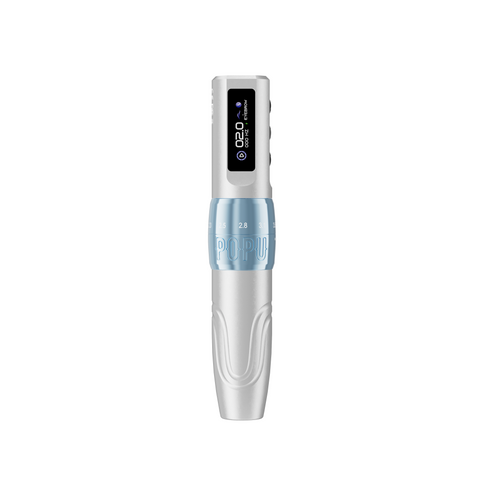
The standard EZ P6 lists six settings: 2.0, 2.4, 2.8, 3.3, 3.7 and 4.2 mm. If your current routine uses a familiar intermediate position, compare that position explicitly. The six settings give this machine a defined adjustable platform for lining, shading and filling work.
The P6 Turbo lists tool-free adjustment from 1.0 to 5.0 mm. That is a broader stated range. Use the offered adjustment information for Turbo itself rather than borrowing the standard P6's six-position list. Similar names can identify different mechanisms and options.
Keep mechanical travel separate from needle protrusion
Stroke is the travel generated by the machine during each cycle. Needle protrusion describes how far the needle extends from the tip in the selected setup. They are separate adjustments with separate roles.
Read the controls in the machine instructions and keep your cartridge selection with the working settings you record. Stroke is not a measurement of implantation depth. A useful purchase comparison concerns the mechanical platform you want to use alongside your trained hand movement and cartridge choice.
Compare the response you will use
Choose the standard P6 when its six positions and substantial 38 mm body fit your preference. Choose Turbo when its wider 1.0–5.0 mm adjustment and lighter, 35 mm direct-drive format are features you want in your work. Both are professional working choices; the useful distinction is how you intend to use those features.
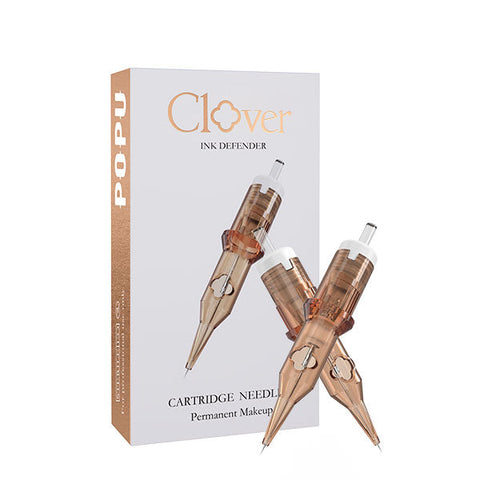
Keep the same cartridge task in view. A liner remains the choice for concentrated linework, while magnum configurations offer different working edges for coverage. Changing the cartridge grouping and stroke simultaneously introduces two changes. Compare a familiar configuration first when learning the response of a new pen.
Read voltage as another control
Both P6 listings give a 2–12 V operating range. Voltage and stroke remain separate specifications: one is an electrical operating setting and the other mechanical travel. A longer stroke number alone does not prescribe a universal voltage or a technique setting.
Use the exact model instructions and your established method to choose working settings. Save the machine model, stroke selection, cartridge and electrical setting together. That creates a useful reference for repeating the setup rather than relying on the endpoints printed in a product title.
Finish with the package you need
Once the pen's working platform is clear, choose Pen for a one-battery package or Pen + Extra Power for a matching spare with the same machine. The power package supports your charging routine while the stroke mechanism stays with the chosen model.
For your shortlist, write the range, actual offered adjustments and the reason you want them. Then open the standard P6 or Turbo page to choose colour and package. You finish with a machine selected for its working role and a supply arrangement selected for the day.
Questions about stroke specifications
Does a wider range automatically make a machine better for me?
Choose a wider range when you will use the adjustment it adds. A defined set of positions or a fixed response can be the more purposeful choice for a familiar routine.
Can I apply the P6 six-position list to Turbo?
Use each model's own adjustment information. Standard P6 lists six positions; Turbo lists its separate 1.0–5.0 mm tool-free range.
Does another battery change the stroke?
It adds power provision for rotation. The stroke mechanism remains part of the selected machine.