


Build each station around its most frequent mark. For the PMU chair, start with Pinky Pro 0601RL, twenty cartridges when the regular job is fine, isolated detail. For the tattoo chair, start with Thunder Pro 0803RL, twenty cartridges when artists repeat compact outline work. Add coverage options separately after identifying the smallest and widest passages each station needs to handle.
Plan around the jobs already on the calendar
A studio takes small tattoo bookings on one chair and brow services on another. The tattoo artist often draws a clear outline around a compact shape. The PMU technician uses isolated accents to connect sparse areas to the client's natural brow direction. The team wants to simplify ordering, and the two pens both use cartridges described as universal. That shared description can simplify the compatibility check. The actual briefs still require different working footprints.

Ask each artist to choose a representative approved drawing. On the brow map, point to the small mark that needs space on either side. On the tattoo design, identify the continuous boundary that carries the silhouette. Put these jobs side by side in the purchase decision. The narrow single point serves the accent. The grouped liner serves the visual structure of the outline. The case for stocking both comes from the repeated work at the two stations.
Compare first and second boxes
| Station and role | Cartridge | Point geometry | Working profile | Linked pack |
|---|---|---|---|---|
| PMU first detail box | Pinky Pro 0601RL | One point, 0.20 mm | Single liner | Twenty |
| PMU second coverage box | Pinky Pro 1003RS | Three points, 0.30 mm | Round shader | Ten |
| Tattoo first outline box | Thunder Pro 0803RL | Three points, 0.25 mm | Round liner | Twenty |
| Tattoo second coverage box | Thunder Pro 1007RM | Seven points, 0.30 mm | Curved magnum | Ten |
Wire diameter is the size of an individual wire. Count and layout determine how the wires work together. The Pinky Pro 1003RS and Thunder Pro 0803RL each have three points, but their point diameters and arrangements differ. On a small shape, the shader's more open arrangement serves a different purpose from the compact grouped liner. Compare the mark's edge, width and proximity to other elements rather than ranking cartridges by the number of points.
Add the smallest useful coverage group at each chair
A PMU technician planning a combination brow may need coverage through a small area where an isolated line cannot carry the entire visual result. The Pinky Pro 1003RS, ten cartridges offers a compact shader to compare for that second role. Look at the meeting point between the shaded field and the visible hair strokes in the proposed design. If the tonal shape has a clear boundary and a useful purpose, compare the grouping during the appropriate supervised exercise.
At the tattoo chair, a small illustrative design might pair a defined contour with a larger tonal passage that opens toward the middle. The Thunder Pro 1007RM, ten cartridges offers a curved working edge for a passage with enough room. Compare its footprint with the narrow end of the shape before making it a routine purchase. A broad grouping can serve the open area while a smaller compatible geometry helps where the passage meets the outline.
Standardize the purchasing check across both chairs
Confirm the exact handpiece, grip, cartridge interface, and intended use at each station. Use a shared ordering list with separate entries for the role each product serves. Compare the labeled package and exact variant, especially if multiple options carry similar geometry names. Review package integrity and the studio's procedures before assigning any cartridge to professional use. Both artists can follow the same purchasing check while choosing different assemblies for their work.
For a small team, this avoids buying a wide assortment on day one. Begin with the two recurring linework roles. Add a shader when upcoming appointments or training contain a clear tonal job for it. If a group appears only in an occasional design, the linked ten-cartridge option gives the studio a defined way to trial that role. Scale the next purchase after observing how often that shape actually comes up.
Frequently asked questions
Can one round liner cover both stations?
A shared choice can work when the exact cartridge fits both machines and the same footprint suits both marks. In this example, the PMU accent and tattoo outline ask for distinct line weights, so the station-specific choices make more sense.
Should I order both shaders with the first two boxes?
Order the shader that serves a job already on the calendar. A combination brow and a broad tattoo transition have different coverage requirements. Buy each shader when that particular role recurs.
Do matching wire diameters make the products interchangeable?
Matching wire diameters alone do not make these cartridges interchangeable. Needle count, grouping, taper, interface and intended use also matter. Compare each exact product against the handpiece and the shape it needs to serve.
For related background, see the cartridge needle geometry guide.
For a studio that offers both services, order Pinky Pro 0601RL (20-pack) for PMU detail work and Thunder Pro 0803RL (20-pack) for tattoo lining. Before stocking each station, check that its cartridge fits the handpiece and that the needle grouping suits the line you need.
Equipment covered in this guide
-
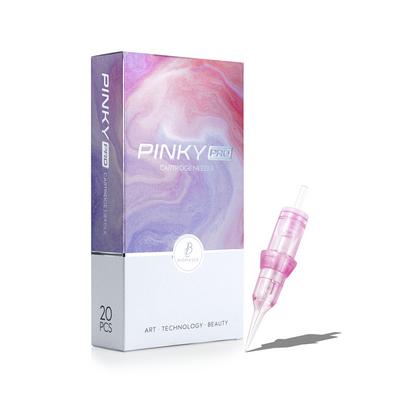 Pinky Pro 1R Single Round Liner PMU Cartridges
0601RL (1R-0.20mm) / Pinky Pro 20pcs
$14.49 USD
View product
-
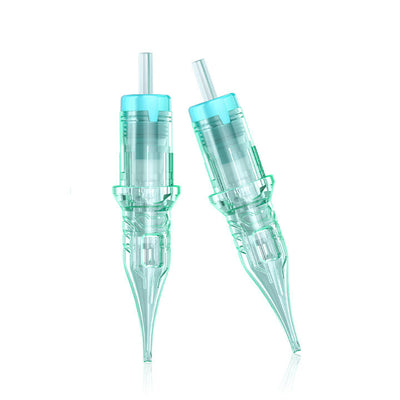 Thunder Pro RL Round Liner Tattoo Cartridges
0803RL / Box of 20
$13.59 USD
View product
-
 Pinky Pro RS Round Shader PMU Cartridges
1003RS (3RS-0.30mm) / Pinky Pro 10pcs
$7.29 USD
View product
-
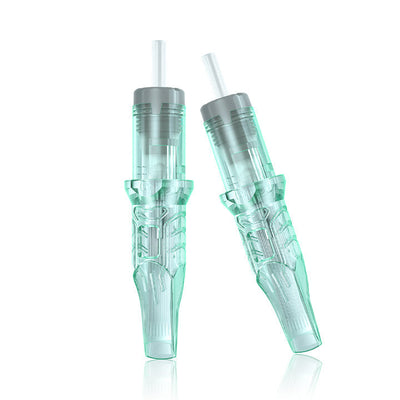 Thunder Pro RM Round Magnum Tattoo Cartridges
1007RM / Box of 10
$7.69 USD
View product

