

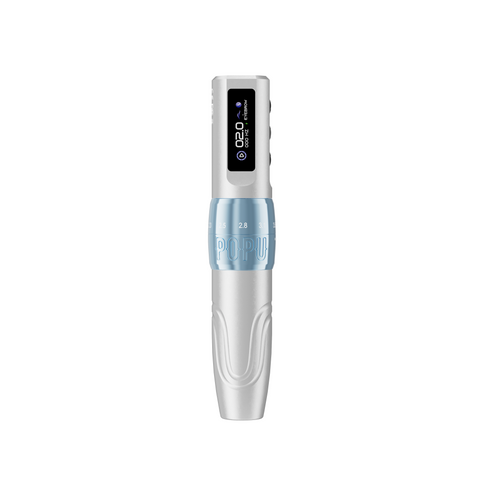


Buy one Black TP010 Kit per student when everyone needs to practise at the same time. The extra handpieces turn class time into repetitions and let the instructor give feedback while students are still working. Buy one kit per station when the class is designed around pairs who take turns and have a clear task while they watch.
Compare the class plans for six students
| Class resource | Six individual TP010 Kits | Three shared TP010 Kits |
|---|---|---|
| Simultaneous hands-on places | Six | Three |
| Turns needed to give everyone a practice slot | One | Two |
| Power included | Two compatible battery heads per pen | Two compatible battery heads per pen |
| Machine response | Same fixed 3.0 mm stroke at each station | Same fixed 3.0 mm stroke at each station |
| Personal practice supplies | Allow materials for six students | Allow materials for six students |
| Best class format | Repetition with the instructor circulating | Paired observation with a scheduled exchange |
For a 40-minute practice block, individual stations give every learner access to the pen during that block. If you plan two equal turns and reserve four minutes for the changeover, a shared station provides 18 minutes of machine time per student. That is an example schedule, and it shows what the instructor trades for three fewer machines. It works when the other 18 minutes have a purpose. Give the observer one visible thing to look for, such as whether a curve stays open or whether the student can join two short marks without a visible step.
Plan the reset before ordering the stations
The reset is the hinge between the two turns. A shared bench needs room for each student's own practice material and access to a fresh cartridge. The spare battery should be ready for the second turn, especially if the first student uses the full practice period. With individual stations, the teacher can stop the group and repeat the demonstration at the same time for everyone. That saves explanation time when most of the class is meeting the same problem. In paired work, the student can use the observation to improve their own attempt and the instructor can address different problems as each pair progresses.
Count line and shade supplies separately
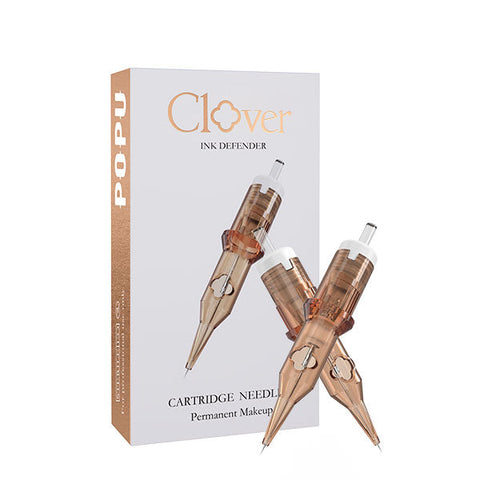
A narrow line exercise and a soft shading exercise use different footprints. The Pinky Pro 0601RL puts one 0.20 mm point on the pattern. The 1003RS uses three 0.30 mm points for a wider group. Both use EO-sterilised 304 stainless steel needles and clear PC bodies. Their silicone anti-backflow membranes provide a barrier toward the handpiece. The transparent body also helps the instructor show what part of the assembly the learners are handling during setup. If the six-person plan calls for one fresh liner and one fresh shader per person, allocate six of each grouping. A single 20-pack of each covers those two groups of six and leaves further units for additional exercises. Keep the stock calculation tied to what each learner will actually do.
Count hands-on slots before you count pens
In a class of six, six machines let all six students practise the instructor’s demonstration at once. Three stations can serve the same group in two rotations. In the first rotation, one student works while their partner watches how the line starts and ends. Then they switch roles. Build the station reset into the schedule so the second student still gets the full exercise.
Shared stations work well for that kind of paired feedback. If the instructor expects everyone to finish several full rows while they circulate, individual machines make better use of a fixed teaching block.
Buy practice supplies for people and machines for stations
Each TP010 Kit supplies a fixed 3.0 mm universal PMU pen, two battery heads, starter cartridges and pigment cups. Give the spare battery a place at every station so an artist can switch packs without holding up the next turn.
Give each student their own practice surface and a fresh cartridge for their turn. Buy the flat A4 silicone practice skin, 10-pack for room to repeat lines. Count the line exercises and order Pinky Pro 0601RL, 20-pack to cover them. If the class also teaches soft shading, put Pinky Pro 1003RS, 20-pack on the list as a separate grouping.
For six learners practising together, buy six Black TP010 Kits, the 10-pack of A4 practice sheets and the cartridge boxes for the exercises. For the paired plan, buy three kits and keep the same per-student supply allowance.
FAQ
How many pens do I need for six students?
Six for simultaneous practice. Three work for paired stations when the lesson plan gives every student a full turn, time to observe and time to reset the station.
Do shared machines reduce the number of cartridge packs?
Count fresh cartridges from the number of students and exercises. Sharing the handpiece changes the machine order. Each student still gets their own practice surface and fresh cartridge for the turn.
Is the six-pen plan still useful with one instructor?
Yes when the teacher wants to give live feedback during the same exercise. Use the shared plan when the teacher deliberately wants the second learner to observe and discuss each mark.
Should we add a second power pack to the kit order?
Each TP010 Kit already includes two battery heads. Use the supplied second pack for turnover and order separate compatible power only if the academy needs another reserve.