

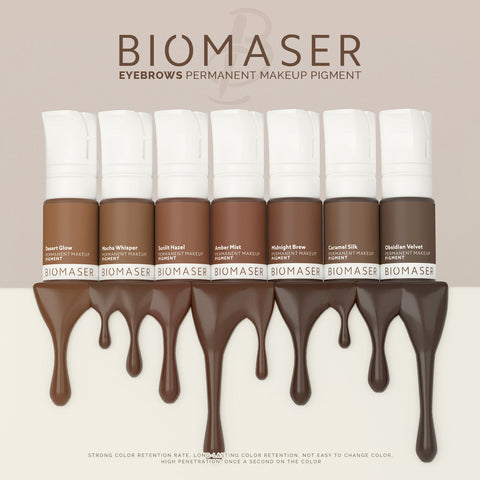

Start your brow pigment shortlist with the depth and colour direction of the brow you want to create. Brown Coffee / BPE02 is a useful central choice for medium-depth, neutral brown shading and hair strokes; Light Brown / BPE01 gives you a softer direction, while Warm Coffee / BPE06 adds deeper, neutral definition. Those three roles make a practical starting palette, and a warmer or cooler brief gives you a reason to add another shade.
For a permanent makeup (PMU) artist choosing supplies, the useful question is which bottle earns a place in the next design. A client asking for a soft, lightly framed brow needs a different colour plan from someone wanting a deeper arch and clearly defined strokes. Write that difference down before browsing the shades, and your shopping list becomes much easier to narrow.

Choose the depth first, then the brown direction
Depth describes how light or dark the colour is; undertone describes its warm, neutral or cool direction. Choose both. Two browns can offer deeper definition while giving a different colour impression, and a lighter shade can still have warmth.
Begin with the planned brow beside the existing brow hair and the overall facial framing the client wants. Describe the target as light and soft, medium and balanced, or deep and defined. Then add the colour direction: warm brown, neutral brown or cooler coffee. This short description is more useful for shopping than a request for “a natural brown,” which could mean any of those combinations.
Opacity adds another distinction. A medium-opacity pigment has a different coverage role from a high-opacity pigment; opacity and depth describe separate properties. In this range, Light Brown and Brown Coffee have medium opacity, while Warm Coffee has high opacity. That makes the first two useful for a soft-to-medium palette and gives Warm Coffee a deeper defining role. Your technique and the existing canvas still shape the finished appearance; the bottle characteristics help you select the supplies for that plan.
A neutral three-shade palette with a job for each bottle
Light Brown / BPE01: the softer end
This neutral, yellow-based light brown with medium opacity is a good first choice for a softly framed brow or a graduated design that needs lighter sections. Its value alongside Brown Coffee is the clear difference in depth: you have a lighter option ready when the brief calls for softness.
Choose Light Brown / BPE01 when light brown is the main colour direction, or when lighter transitions have a specific place in your planned palette.
Brown Coffee / BPE02: the central brown
Brown Coffee is a neutral brown with medium opacity for shading bases and defined hair strokes. Start here when the brief calls for balanced, medium-depth brown definition. Its usefulness comes from having a central shade around which you can organise lighter and deeper choices.
For a studio building a focused brow range, Brown Coffee / BPE02 is a sensible first bottle. Add Light Brown if your work includes softer colour plans, and Warm Coffee if deeper definition is a recurring requirement.
Warm Coffee / BPE06: deeper neutral definition
Warm Coffee has a deep coffee colour and high opacity, with uses in brow shading, hair strokes and added definition along the brow ridge. Despite the word “Warm” in its product name, its listed colour direction is neutral. Select it for that deeper neutral role rather than treating the name as a substitute for the shade description.
Choose Warm Coffee / BPE06 when the target needs more depth than your central brown. Paired with Brown Coffee, it gives you medium and deeper options within a neutral colour plan.
When the brief calls for warmer or cooler coffee
The other four shades become useful when they answer a colour need in your work. Light Coffee / BPE03 is a warm coffee brown with medium opacity for a natural brown base. Pale Coffee / BPE04 offers a warm, pale coffee direction with medium opacity for a softer impression; Brown Coffee is its useful companion where the design needs deeper definition.
For a deeper warm brown, choose Dark Brown / BPE05, which has high opacity and a role in stronger contours and richer shaded areas. For deeper, cooler definition and dark brow hair strokes, Black Coffee / BPE07 supplies a cool, high-opacity coffee shade. This gives you a clear warm-to-cool choice at the deeper end of the range.
Use the eight-shade Biomaser Blend brow guide to compare those roles on one product page. Select the colour that serves the planned brow, then add a companion only when it contributes a lighter transition, a central base or deeper definition.
How many colours belong in one brow plan?
A single shade can be enough when it supplies the colour role the design needs. A graduated plan can give two shades distinct jobs: Light Brown for the softer end and Brown Coffee for the central brown, for example. A more varied palette can add Warm Coffee where deeper definition is part of the brief.
Having three bottles available does not mean every appointment needs all three. They can support different appointments or different parts of a colour plan, and having a companion shade available is separate from mixing it into the same cup. When mixing is part of your trained method, organise the colours by their roles and keep a record of the actual combination you used. A universal recipe cannot capture the target shade, existing colour and technique of each appointment.
Buy by role, then replenish by exact shade code
Place this service palette within the pigment selection guide when planning colours across brows, lips and eyeliner.
If most of your work calls for medium neutral brown, begin with BPE02 and build around the briefs you actually receive. A regular need for softer colour makes BPE01 a worthwhile addition; a regular need for deeper neutral definition gives BPE06 a clear place. Warm and cool additions can follow the same logic.
Record the standard shade name and code together when you choose and reorder: Brown Coffee / BPE02, for example. Each bottle in this Blend range is 12 ml, and the combined product page lets you select the exact shade again. The brow pigment selection also brings the relevant choices together when you are planning a broader palette.
If your colour shortlist is for a hair-stroke design, continue with the hair-stroke brow needle, colour and practice setup to connect that choice with the rest of the working configuration.
Questions before choosing your brow colours
Which shade should I start with for a medium neutral brown?
Start with Brown Coffee / BPE02. Its neutral brown colour, medium opacity and uses for shading bases and hair strokes give it a central role in this brow palette.
Is Warm Coffee / BPE06 a warm-toned pigment?
Its listed colour direction is neutral. It provides a deep coffee shade with high opacity for deeper definition; choose by those characteristics as well as the name.
Do I need three pigments for every brow appointment?
Choose the number by the colour roles in the design. One shade may fulfil the plan, while two or three give distinct lighter, central and deeper options. A studio palette can serve several different appointments.